










The short version
- Six of eight jurisdictions allow privately owned e-scooters on paths and some roads — Queensland, Victoria, Western Australia, South Australia, Tasmania and the ACT — each with strict device and riding rules.
- NSW and the NT are the exceptions. In NSW your own scooter is restricted to private property outside designated hire-trial sites. In the NT, only very low-powered private devices (200 W / 10 km/h) are lawful in public; everyone else uses hire scooters in Darwin.
- 25 km/h is the national number. Every state that allows private scooters caps the device at 25 km/h, and riding limits are often lower (20 km/h in Victoria, 10–15 km/h on footpaths). Scooters advertised at 40, 60 or 70 km/h are off-road / private-land machines in every state.
- Helmets are mandatory in all eight jurisdictions. One rider only, no drink or drug riding, no phone in your hand, and lights after dark.
- Queensland changed the rules on 31 August 2026: riders must be aged 16 or older and hold a driver licence (learner permit minimum), with supervision exemptions for younger riders.
Quick comparison: e-scooter rules by state
Scroll the table sideways on a phone. Device caps refer to the scooter itself; riding speed is often lower than the device cap.
| State | Private scooter in public? | Minimum age | Helmet | Device cap / weight | Footpath | Paths & roads |
|---|---|---|---|---|---|---|
| QLD | Yes PMD rules |
16+ and hold a driver licence from 31 Aug 2026; under 16 with adult supervision | Yes | ≤25 km/h; ≤60 kg | 12 km/h | Shared paths 12 km/h passing pedestrians; bike paths 25; roads ≤60 km/h at ≤25 |
| NSW | No Hire only in trial sites (to 22 Jan 2027); private = private property |
16+ (hire) | Yes | Hire devices only (about 32 kg), capped at 20 km/h | No | Shared paths 10 km/h; roads ≤50 km/h at ≤20, inside trial zones only |
| VIC | Yes | 16+ | Yes | Capable of ≤25 km/h; ≤45 kg; ride at ≤20 km/h | No | Shared & bicycle paths; roads ≤60 km/h, at ≤20 km/h |
| WA | Yes | 16+ | Yes | ≤25 km/h; ≤25 kg; 125×70×135 cm | 10 km/h | Bike/shared paths 25; roads ≤50 km/h and bike lanes at ≤25 |
| SA | Yes Since 13 July 2025 |
16+ | Yes | ≤25 km/h; ≤45 kg; bell required; electrical safety standards | 10 km/h | Shared paths & beaches 10; separated paths/bike lanes 25; roads ≤50 (60 only in a bike lane) |
| TAS | Yes Since 1 Dec 2021 |
16+; under 16 limited to ≤200 W / 10 km/h devices | Yes | Not capable of >25 km/h; <45 kg; 125×70×135 cm | 15 km/h | Shared/bike paths and eligible roads ≤50 km/h at ≤25 |
| ACT | Yes | Under 12 supervised; 12+ solo (hire 16+) | Yes | ≤25 km/h; ≤60 kg; 125×70×135 cm | 15 km/h | Paths 25; roads only where no path exists; 10 km/h across crossings |
| NT | Restricted Private devices ≤200 W / 10 km/h; Beam hire in Darwin |
18+ (hire) | Yes | 200 W and 10 km/h for private devices; hire capped at 15 km/h | Hire only, within the Darwin operating area | No road riding except up to 50 m to bypass an obstruction |
Rules that apply almost everywhere
State laws differ in the details, but the core obligations are remarkably consistent. Wherever you ride in Australia, expect all of the following:
- Approved helmet, securely fastened. An AS/NZS 2063 bicycle helmet is accepted everywhere; Queensland also recognises equivalent standards such as EN 1078 and CPSC 16.
- One rider per scooter. No passengers and no animals (this is why two-person "doubling" videos are illegal).
- No drink or drug riding. Queensland applies a 0.05 BAC limit; Western Australia, Victoria and South Australia apply driver-equivalent drink/drug laws; NSW applies the same alcohol and drug offences as motor-vehicle drivers; TAS, the ACT and NT all prohibit riding under the influence.
- No phone in your hand while moving — mounted navigation/audio is allowed in some states but touching the phone while riding is not.
- Lights after dark. A white front light and red rear light (or reflector) are required for night or low-light riding in VIC, SA, TAS, WA and the ACT.
- Give way to pedestrians, keep left unless overtaking, and park without blocking paths, ramps, stops or crossings.
- No registration, licence or insurance is needed for a compliant PMD in QLD, VIC, WA, SA, TAS or the ACT — with the new exception that Queensland now requires a driver licence (learner minimum) from 31 August 2026.
- Public transport access varies. PMDs are banned on Adelaide Metro services and there are rail restrictions in NSW; Queensland allows them on South East Queensland trains and ferries but not buses or trams. Check the operator before you travel.
- Buy compliant hardware. Look for the RCM (Regulatory Compliance Mark), certified battery and charger, and local warranty. Modified or home-converted battery packs are a growing enforcement and fire-safety focus.
State-by-state rules
Queensland (QLD)
Legal — PMD frameworkThe device
- Designed for one person, electric, with one or more wheels.
- Maximum 60 kg (without rider); no larger than 750 mm wide × 1,350 mm high × 1,100 mm wheelbase.
- Motor-propelled speed must not exceed 25 km/h.
Who can ride — changed 31 August 2026
- Riders must be 16 or older and hold a valid driver licence (learner permit minimum). Equivalent interstate or overseas licences are recognised; an expired, suspended or disqualified licence does not count.
- Riders under 16, and 16–17-year-olds without a licence, may ride while supervised by a parent or guardian within safe distance.
- Some low-pedestrian recreational areas (rail trails, mountain-bike trails, private recreational facilities) are exempt; riders unable to hold a licence for medical reasons can apply for an E-Mobility Driver Licence Exemption (form F5464).
Where and how fast
- Footpaths: 12 km/h. Shared paths: 12 km/h when passing pedestrians unless signs say otherwise. Separated and bicycle paths: up to 25 km/h.
- Roads: bike lanes on roads up to 60 km/h, physically separated bike lanes, and streets up to 60 km/h — at no more than 25 km/h, obeying any lower posted limit.
Sources: Queensland Government — Rules for personal mobility devices · StreetSmarts QLD — E-bikes, e-scooters and PMDs
New South Wales (NSW)
Private property only (hire trials continue)- Privately owned e-scooters are not allowed on roads or any road-related area — including footpaths, shared paths, cycleways and bicycle lanes. They may legally be used only on private property.
- Because an e-scooter cannot be registered, riding one in public can attract penalties for using an unregistered, uninsured and unlicensed motor vehicle.
- The NSW Government's Shared E-scooter Trial Program runs until 22 January 2027 in designated sites (locations have included Wollongong and Forster-Tuncurry, and sites can change or conclude). Rules inside trial areas: hired devices only, 16+, approved helmet, no footpaths, 10 km/h on shared paths and 20 km/h on roads up to 50 km/h, no passengers, no phone, no alcohol, and no leaving the geofenced zone.
Sources: Legal Aid NSW — E-bikes, e-scooters and e-skateboards · NSW Government — Shared E-scooter Trial Program
Victoria (VIC)
Legal — state-wide e-scooter rulesThe device
- Maximum speed of 25 km/h on level ground, maximum weight 45 kg, two wheels in line, a footboard between them and handlebar steering; built to carry one person standing or seated.
- It is against the law to ride a device capable of more than 25 km/h on public land. (Some Victorian road-safety education material also quotes a 200 W power figure — if a specification is ambiguous, confirm with VicRoads before buying.)
Riding rules
- 16 or older, properly fitted helmet, and ride at no more than 20 km/h.
- Ride only on shared-use paths, bicycle paths, and roads with a speed limit up to 60 km/h. Footpaths are off-limits, as are roads over 60 km/h and freeways.
- Front and rear lights (flashing or steady) at night or in low light; no passengers or animals; no drink or drug riding; pedestrians have priority on shared paths.
Sources: VicRoads — E-scooter road rules · TAC — E-scooters
Western Australia (WA)
Legal — eRideable rules- Device: must not exceed 25 km/h on level ground, weigh 25 kg or less, and be no larger than 125 cm long × 70 cm wide × 135 cm high; designed for one person.
- Riders 16 and over only. An approved bicycle, skateboard or motorcycle helmet is required, and a bell or other warning device must be fitted.
- Speeds: 10 km/h on footpaths and pedestrian crossings; up to 25 km/h on bicycle paths, shared paths and local roads where safe; roads only where the speed limit is 50 km/h or less.
- Illegal on roads over 50 km/h and on paths signed 'no wheeled devices'; use the bicycle side of separated paths.
- The same drink and drug driving laws as car drivers apply; phones may not be held in the hand (handlebar-mounted navigation and hands-free calls follow driver-style rules); lights and reflectors are required at night; ride single file in groups and keep 2 m behind vehicles.
Source: WA Road Safety Commission — eRideables (page last updated May 2026)
South Australia (SA)
Legal since 13 July 2025The device
- Electric, one person, 45 kg or less, no larger than 125 × 70 × 135 cm, effective brakes, no sharp protrusions, a working bell or horn, and it must meet electrical safety standards. Seated devices are allowed if they meet the same spec.
Riding rules
- 16 or older, helmet required, lights in low light or at night. No driver licence, registration or CTP insurance.
- 10 km/h on footpaths, shared paths, beaches and crossings; 25 km/h on separated paths, bicycle paths, physically separated bike lanes, bike lanes on roads up to 50 km/h, and roads up to 50 km/h keeping left.
- 60 km/h roads may only be used where a bike lane exists (and only during that lane's operating hours).
- No phone held in the hand or resting on the body while moving (a handlebar mount for GPS or a speedometer is allowed without touching); no passengers; speeding and drink/drug riding can attract demerit points.
Sources: SA.GOV.AU — Personal mobility devices · SA Department for Infrastructure and Transport
Tasmania (TAS)
Legal since 1 December 2021- Device (PMD): electric, at least one wheel, under 125 × 70 × 135 cm, under 45 kg, and not capable of travelling faster than 25 km/h on level ground; one person only. A device over spec is classed as a motor vehicle and cannot legally be used unregistered.
- Age: 16 or older. Children under 16 may only use low-powered e-scooters that do not exceed 200 W and 10 km/h.
- Speeds: 15 km/h on footpaths; 25 km/h on shared paths, bicycle paths and roads. Road use is limited to streets of 50 km/h or less with no dividing line or median strip (and a single lane on one-way roads), plus roads declared by councils.
- Approved helmet; no phone; no passengers or animals; no alcohol or drugs; give way to pedestrians and keep left.
- At night: a white front light, red rear light and red rear reflector are all required. Police can fine riders and temporarily confiscate devices. No registration or insurance is needed.
Australian Capital Territory (ACT, Canberra)
Legal — PMD rules- Device: electric, one rider, 60 kg or less (without rider), maximum 25 km/h on level ground, no larger than 1,250 × 700 × 1,350 mm, with a braking system. Anything faster is considered a motor vehicle and is banned from paths — private property only.
- Age: children under 12 must be supervised by an adult; riders 12 and over may ride solo. Shared (Lime) devices are 16+.
- Where: footpaths, shared paths and nature strips; roads only where there is no footpath, shared path or nature strip (or it isn't practical to use), taking the shortest route back.
- Speeds: 15 km/h on footpaths; 25 km/h on shared paths, bicycle paths and the bicycle side of separated paths; slow to 10 km/h when crossing.
- Helmet, bell or warning device, lights/reflectors at night or in hazardous weather; no phone, no passengers, no alcohol or drugs; park without blocking paths or entrances.
Source: Transport Canberra — E-scooters and personal mobility devices
Northern Territory (NT)
Restricted- A privately owned e-scooter is lawful in a public place only if it meets the Australian Road Rules definition of a "motorised scooter": maximum 200 W and 10 km/h (with helmet, give-way rules, and no use on roads over 50 km/h or roads with a dividing line or median).
- Most retail e-scooters exceed these limits. Anything more powerful or faster is classed as a non-complying motor vehicle, which cannot be registered — so riding it on roads, paths or other public places is unlawful without an exemption from the Registrar of Motor Vehicles. Penalties include unregistered/uninsured and unlicensed-riding fines, demerit points and licence cancellation. Private property use remains fine.
- Public hire: Beam e-scooters operate in Darwin under agreement with the City of Darwin, capped at 15 km/h. Riders must be 18+, wear an approved helmet, stay inside the geofenced operating area, and may only ride on a road for up to 50 m to bypass an obstruction.
Is the scooter I'm buying street-legal?
Most disputes at the register — and most fines — come down to the device itself, not how you ride it. Work through this checklist before you buy:
- Top speed of 25 km/h or less on level ground. Several states define this by what the scooter is capable of, not how fast you actually ride. An app-based speed limiter helps, but a scooter that can be trivially derestricted may still fail the spec — ask the retailer for a written compliance statement.
- Weight and dimensions within your state's cap. 25 kg in WA; 45 kg in VIC, SA and TAS; 60 kg in QLD and the ACT, with length/width/height limits published by each state.
- Hardware for the rules: a bell or horn, effective brakes, and front and rear lights (or mounts) for night riding.
- Electrical safety and support: RCM mark, certified battery and charger, Australian warranty, local support and spare parts.
- An AS/NZS 2063-approved helmet to go with it — mandatory everywhere in Australia.
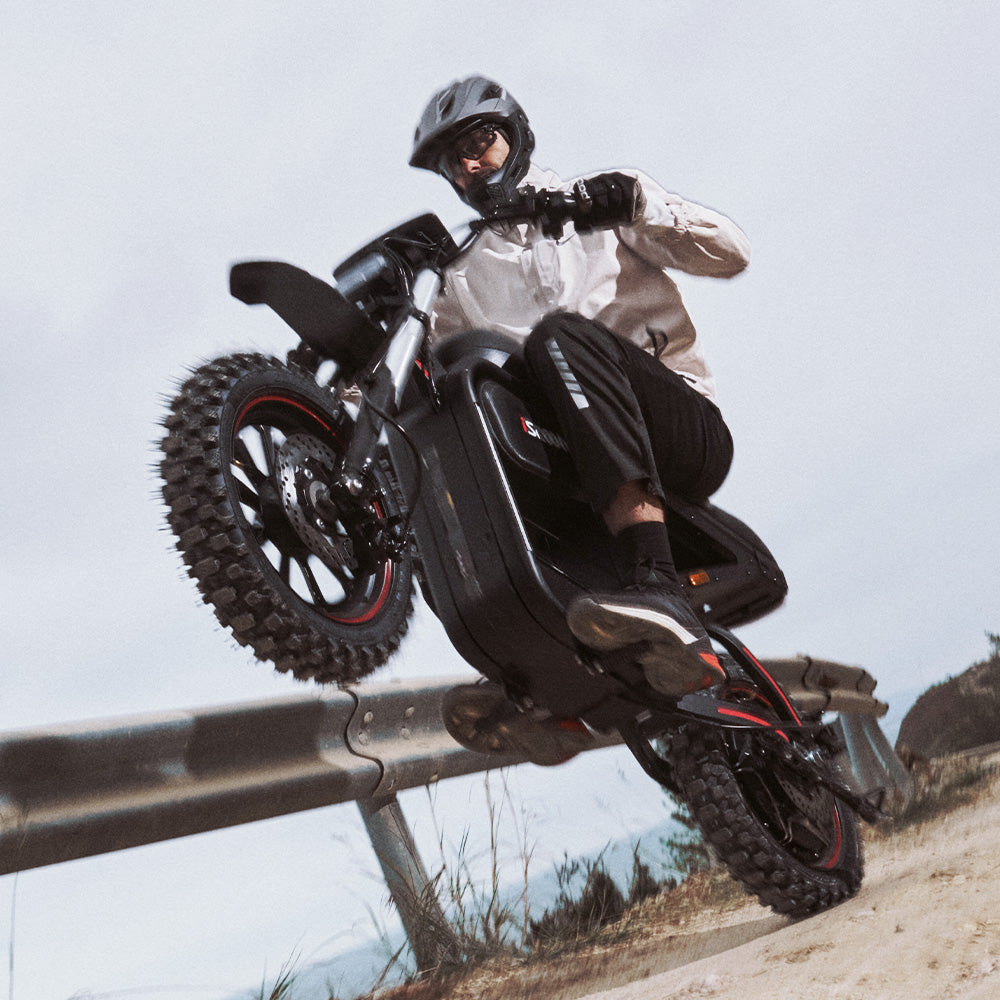
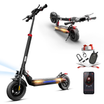
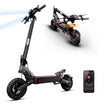
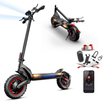
What about high-performance scooters? Models advertising 40, 60 or 70 km/h top speeds with 800 W–2000 W motors — popular for power and off-road use — are not legal personal mobility devices on public roads or paths in any Australian state, and they generally cannot be registered as motor vehicles either. They are built for private property, paddocks and dedicated off-road areas. Retailers should market them that way, and riders should treat them accordingly.
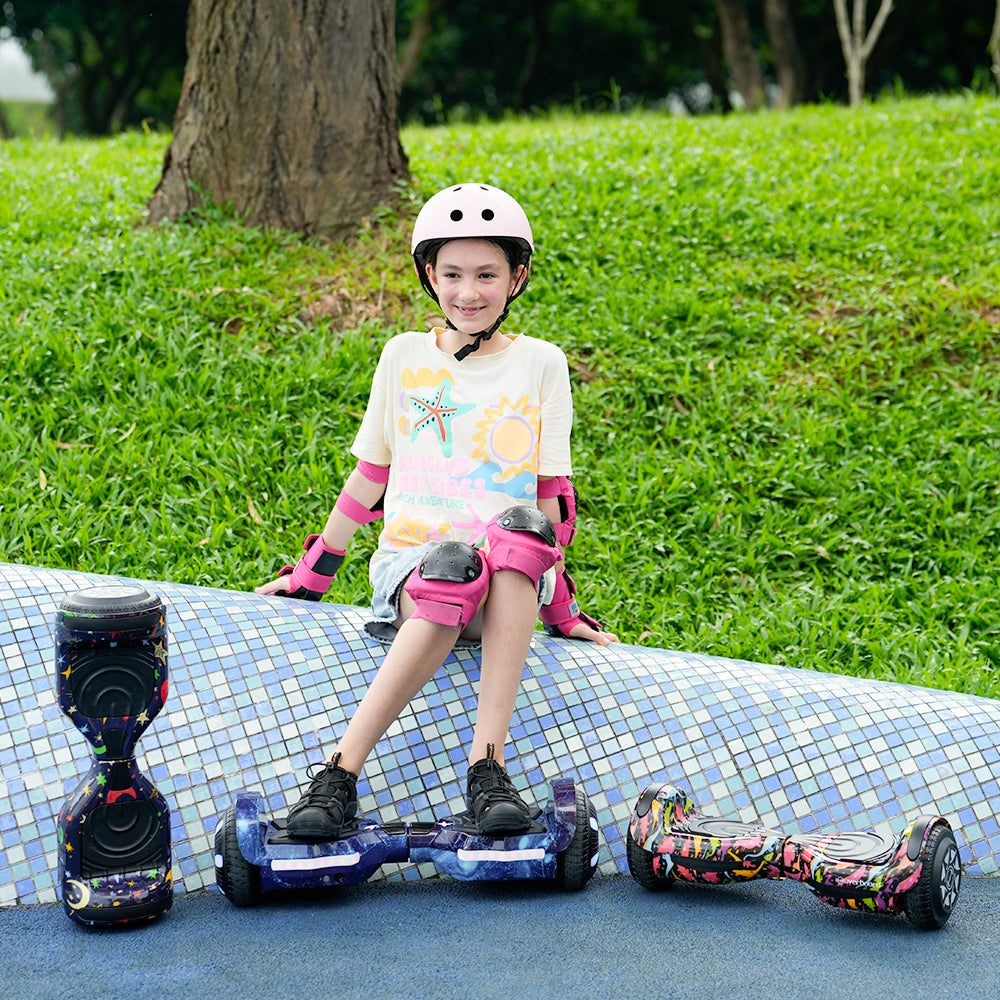
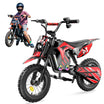
Kids' electric scooters and ride-on toys are designed for private property and supervised recreational use. If children ride on public paths, state age rules apply: supervision under 12 in the ACT; under-16 devices limited to 200 W/10 km/h in TAS; supervised under-16 riding in QLD; and a minimum age of 16 for eRideables/PMDs in WA, SA and VIC.
Frequently asked questions
Are electric scooters legal in Australia?
Yes for compliant, privately owned scooters in QLD, VIC, WA, SA, TAS and the ACT, subject to device specs and riding rules. In NSW private scooters are restricted to private property outside hire-trial sites, and in the NT only devices at or below 200 W and 10 km/h are lawful in public.
Do I need a driver licence, registration or insurance?
Generally no for a compliant PMD — no licence, registration or compulsory insurance is required in the states that allow them. The exception is Queensland, where from 31 August 2026 riders must be 16+ and hold at least a learner driver licence (with supervision and medical exemptions). NT hire riders must be 18+.
Can I ride an e-scooter on the footpath?
Not in Victoria, and not on private scooters in NSW. Elsewhere footpaths are allowed at low speed: 10 km/h in WA and SA, 12 km/h in QLD, and 15 km/h in TAS and the ACT (with 10 km/h across crossings in the ACT). Always give way to pedestrians.
What happens if I ride an overpowered or over-speed scooter?
It is typically treated as riding an unregistered, uninsured and unlicensed motor vehicle — which carries on-the-spot fines, demerit points in some states, and possible seizure of the device. Because such scooters don't meet vehicle standards, they can't simply be registered afterwards.
Can I take my e-scooter on a train or bus?
It depends on the operator and state. PMDs are banned on Adelaide Metro services; NSW has rail restrictions for powered devices; Queensland allows them on South East Queensland trains and CityCat ferries but not buses or trams; the ACT allows light-rail travel under conditions and bus travel at the driver's discretion (non-foldable/hire scooters excluded). Check before you travel.
Is a helmet really mandatory?
Yes — an approved, securely fastened helmet is required in every state and territory covered in this guide.
What is the legal speed limit for an e-scooter?
The device cap is 25 km/h almost everywhere private scooters are allowed. Riding limits are lower by location: 10–15 km/h on footpaths, 20 km/h everywhere in Victoria, and 25 km/h on paths and eligible roads elsewhere. The NT caps private devices at 10 km/h outright.
I'm visiting from overseas or interstate — can I hire a scooter?
Hire is the simplest option for visitors, including in NSW trial sites and Darwin (18+ in the NT). In Queensland, the new rider-licence rule recognises equivalent interstate or overseas licences.
Official sources
All rules above were compiled from the following government and statutory sources, reviewed in September 2026:
- Queensland Government — Rules for personal mobility devices
- Queensland StreetSmarts — E-bikes, e-scooters and PMDs
- Legal Aid NSW — E-bikes, e-scooters and e-skateboards
- NSW Government — Shared E-scooter Trial Program
- VicRoads — E-scooter road rules
- TAC Victoria — E-scooters
- WA Road Safety Commission — eRideables
- SA.GOV.AU — Personal mobility devices
- SA Department for Infrastructure and Transport — Street-legal e-scooters from July 2025
- Transport Tasmania — Personal mobility devices
- Transport Canberra — E-scooters and personal mobility devices
- NT Government — Electric scooters and bikes
Ride the right scooter for where you live
Riding on Paths and Roads
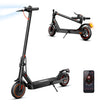
If your state allows private e-scooters, choose a 25 km/h-class commuter and set your riding speed to the local limit — 10–15 km/h around pedestrians, 20–25 km/h on paths and eligible roads.
Browse adult scootersKids Wonderful Adventure
Kids' scooters and ride-ons are built for private property and supervised play models are private-land machines everywhere in Australia. Choose by where it will actually be ridden.
See kids' products